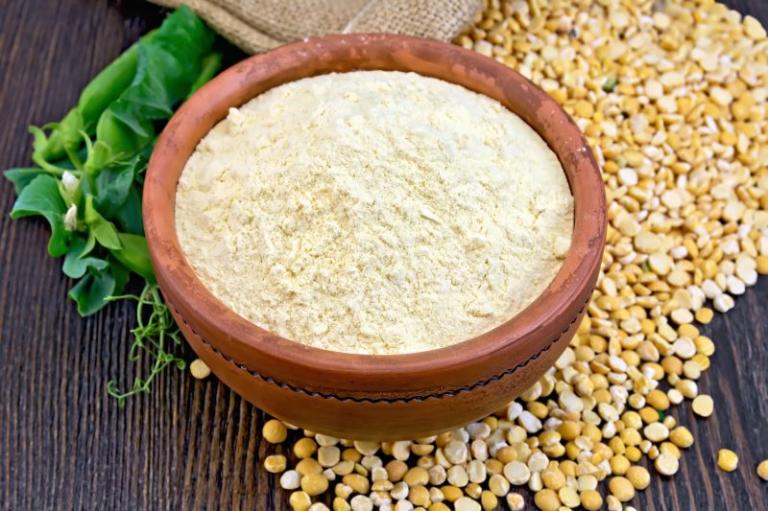
Erbsenstärke konv. und bio - nachhaltige Alternativen für Weizen-, Kartoffel- und Maisstärke
Stellen Sie sich vor, Sie verwenden eine Stärke, die auch eine natürliche Proteinquelle (12 %) ist, alle wertvollen Eigenschaften beibehält und Ihr Produkt sauber, vegan, biologisch und glutenfrei hält! Abgesehen von den funktionalen Eigenschaften, welche die Zugabe von Hülsenfrüchten den Lebensmitteln verleiht, wird die Verwendung von Zutaten auf Hülsenfruchtbasis jeden Tag relevanter, hauptsächlich wegen der gesundheitlichen Auswirkungen, aber auch aus Gründen der Nachhaltigkeit.
Hülsenfrüchte sind eine Kulturpflanze mit geringen negativen Auswirkungen auf die Umwelt. Tatsächlich sind Hülsenfrüchte ein Produkt mit niedrigem CO2-Fußabdruck, das nicht nur für die menschliche Ernährung gut ist, sondern auch für den Boden. Der Anbau von Hülsenfrüchten begünstigt das Leben im Boden, was gleichzeitig das Wachstum anderer Pflanzenarten fördert. Hülsenfrüchte benötigen nur geringe Mengen an Stickstoff aus dem Boden, was bedeutet, dass diese ohne Stickstoffdünger wachsen können und weniger Treibhausgasemissionen produzieren. Erbsenstärkekonzentrat kann sowohl aus konventioneller als auch aus biologischer Landwirtschaft stammen.
Beides ist eine Alternative zur Herstellung von Produkten mit niedrigem glykämischen Index, was besonders wichtig ist, um Krankheiten im Zusammenhang mit Insulinresistenz zu kontrollieren. Es liefert eine wichtige Menge an Protein, Mineral- und Ballaststoffen und eignet sich für vegane und glutenfreie Rezepturen. Im Vergleich zu anderen Stärken auf Getreide- oder Knollenbasis ist die Verwendung von Erbsenstärkekonzentrat eine natürliche Quelle für:
- Eiweiß
- Mineralien
- Ballaststoffe
- Leicht verdauliche Stärke
Hülsenfrüchte enthalten die doppelte Menge an Protein als Getreide. Einer der Hauptvorteile des Erbsenstärkekonzentrats besteht darin, dass die Hauptfraktion natürlich aus Stärke besteht, aber auch einen bedeutenden Anteil an Eiweiß enthält (etwa 12 %). Das Trockenmahlverfahren bedeutet, dass der Prozess zur Gewinnung der Stärke frei von Chemikalien ist und die Stärke nativ bleibt.
Die Verwendung einer nativen Stärke bietet die Eigenschaften und die Funktionalität einer „rohen Zutat“. Der Gebrauch von nativer Stärke bietet zahlreiche Vorteile in verschiedenen Bereichen. Sie fügt technologische Funktionalitäten hinzu und ermöglicht eine saubere Kennzeichnung, da sie einfach nur als „Erbsenstärkekonzentrat“ deklariert werden muss, eine leicht erkennbare Komponente.
- Native Stärkekonzentrate aus der Trockenvermahlung von Erbsen -> Ideal für saubere Etiketten ohne E-Nummer
- Hoch wasserlöslich -> Hervorragendes Dispergier- und Mischverhalten
- Hochresistente Stärke -> Stabilität gegen Scherkräfte, Säuren, hohe Temperaturen und Enzyme
Das Erbsenstärkekonzentrat ist ein Produkt mit einem hohen Gehalt an Ballaststoffen und Protein. Neben seiner Funktionalität steigert es den Nährwert von Produkten aus vielen Kategorien wie Backwaren, Snacks, Nudeln und vielen glutenfreien Artikeln. Aufgrund seines hohen Nährstoffgehalts ist es besonders relevant für Produkte aus der Kategorie Sporternährung.
Es besteht außerdem die Option, entbitterte Stärke herzustellen. Die Nebengeschmacksstoffe einer typischen Erbsenstärke werden ohne den Einsatz von Chemikalien neutralisiert, wodurch die Funktionalität und ein „sauberes Etikett“ erhalten bleiben. Ein entbittertes Produkt behält die wertvollen Eigenschaften der Stärke und eignet sich für viele Produkte ohne Geschmacksbeeinträchtigung.
Erbsenstärkekonzentrat ist ideal als Teigverbesserer und geeignet, um Soja, Weizen, Mais oder Reis in verschiedenen Anwendungen zu ersetzen, darunter:
Verdickungsmittel (Suppen, Cremes, Puddings und Produkte, die eine cremige Textur erfordern)
- Erbsenstärke ist stabil gegenüber Scherkräften und behält eine stabilere Viskosität als z.B. Weizenstärke
Geliermittel (Marmeladen, Gelees, Bäckereifüllungen)
- Erbsenstärke benötigt höhere Temperaturen, um vollständig zu gelieren, was sie zu einer hervorragenden Option für diese Anwendungen macht.
Textur- und Konsistenzverbesserer
- Hervorragend für den Zusammenhalt in Fleisch- oder vegetarischen Burgern
Mittel zur Volumenexpansion
- Geeignet für knusprige, extrudierte Produkte
- Expandierte Snacks mit hohem Nährwert
- Möglichkeit für kalorienarme Snacks mit hohem Protein- und Ballaststoffanteil
Veganer und glutenfreier Ersatz für Kekse und Backwaren
- Hervorragende Alternative zu Reis, Weizen, Soja, Mais und mehr
- Die Proteine aus dem Stärkekonzentrat fördern eine weichere Krume
- Verzögert den Alterungsprozess und verlängert die Haltbarkeit
- Wirtschaftliche Zutat mit hohem Einfluss auf die Rezeptur
Verbesserung des Nährwertprofils für Nudeln und Backwaren
- Ergänzt niedrige Lysingehalte in Getreide
- In Kombination mit Gluten werden die viskoelastischen Eigenschaften erhalten oder verbessert
- Produkte auf Basis von Erbsenstärke haben einen niedrigen glykämischen Index
- Quelle für Polyphenole und Flavonoide
Hülsenfruchtstärken sind eine ausgezeichnete Option, auch wenn die Absicht nicht darin besteht, glutenfreie Backwaren herzustellen. Erbsenstärke kann auch als Ersatz für Weizenmehl in Backwaren verwendet werden, um den Nährwert und den funktionalen Wert zu erhöhen.
Das Ergebnis ist die Herstellung von Backwaren mit vielen Nährstoffen, wie z. B. Produkte mit hohem Ballaststoffgehalt, die gleichzeitig eine niedrigere glykämische Reaktion fördern. Der Gehalt an Ballaststoffen ist in diesem Fall wichtig, weil er hohe Glukosewerte aufgrund des geringen Gehalts an schnell verdaulicher Stärke vermeidet.
Die Mahlprozesse tragen zur Qualität der Erbsenstärke bei, da sich die gut ausgeführten Mahlbedingungen auf das Endprodukt auswirken, zum Beispiel keine sandige Textur, die im Mund kratzt, sondern glatte und cremige Endprodukte.
Die Informationen zu diesem Artikel wurden uns dankend von der Firma
Viridi Foods zur Verfügung gestellt.
support@viridi-foods.com
Let's simplify the future of change!